In today’s rapidly evolving industrial landscape, precision and efficiency have become critical drivers of success. Modern manufacturing, robotics, and automation heavily rely on advanced imaging technologies to monitor processes, ensure quality, and enhance productivity. Central to these systems is the machine vision lens, an essential component that translates optical information into actionable data. As industries demand greater accuracy and speed, innovations in machine vision lens technology are transforming the way businesses operate, offering solutions that were previously unimaginable.
The Evolution of Machine Vision Lens Technology
Machine vision lenses have undergone remarkable evolution over the past few decades. Early imaging systems were limited by low resolution, narrow fields of view, and basic optical design, restricting their application in complex industrial environments. Today, technological breakthroughs have enabled lenses with superior optical precision, higher light sensitivity, and reduced distortion, expanding their capabilities across diverse sectors.
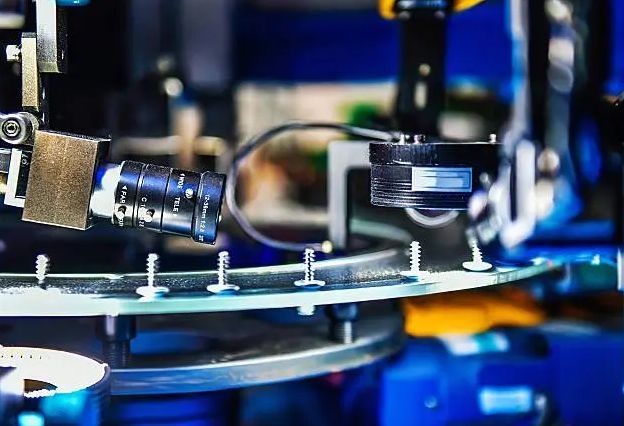
Modern machine vision lenses integrate advanced materials, coatings, and design techniques to achieve exceptional performance. Specialized glass types, anti-reflective coatings, and aspheric lens elements help minimize optical aberrations, enhancing image clarity even in challenging conditions. These improvements allow industries to perform more accurate inspections, detect minute defects, and maintain consistent quality control in high-speed production lines.
Additionally, machine vision lenses now cater to a broader range of applications. From semiconductor manufacturing to automotive assembly, these lenses provide the resolution and precision required for intricate tasks. The evolution of digital imaging sensors has further pushed lens technology, as lenses are now designed to complement high-resolution cameras, enabling enhanced detection and analysis of microscopic details.
Key Innovations Driving Industrial Applications
Several innovations have significantly impacted the performance and utility of machine vision lenses in modern industries. One major advancement is the development of compact, high-resolution lenses. These lenses provide exceptional imaging quality while maintaining a small form factor, making them suitable for integration into robotic systems and confined spaces. Compact lenses reduce the overall footprint of inspection equipment and facilitate flexible deployment across manufacturing lines.
Another notable innovation is the incorporation of telecentric lens designs. Telecentric machine vision lenses maintain consistent magnification across the field of view, eliminating perspective errors that can distort measurements. This feature is particularly valuable in precision engineering and automated quality inspection, where accurate dimensional analysis is critical. Industries such as electronics and medical device manufacturing benefit immensely from telecentric lenses, which allow for reliable, repeatable measurements of small and complex components.
Variable focal length lenses, or zoom machine vision lenses, are also gaining traction. These lenses offer adjustable magnification without compromising optical quality, providing flexibility in inspection and imaging processes. Manufacturers can quickly adapt to different product sizes or production changes without replacing entire lens systems. This adaptability reduces downtime and enhances operational efficiency, making zoom lenses a practical choice for dynamic industrial environments.
The integration of advanced coatings and materials has further elevated lens performance. Anti-reflective and anti-scratch coatings improve light transmission and durability, while low-dispersion glass minimizes chromatic aberration. These enhancements result in sharper, clearer images and extend the lifespan of machine vision lenses, reducing maintenance costs and improving return on investment. Industries operating in harsh environments, such as automotive painting lines or metal fabrication facilities, particularly benefit from these robust designs.
See also: Precision Matters: Tuning the Tech That Watches the Road for You
Enhancing Accuracy and Efficiency Through Smart Systems
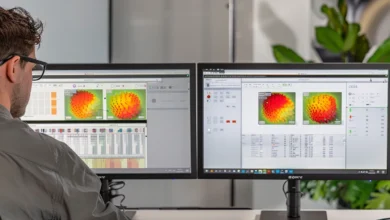
Modern industries are increasingly combining machine vision lenses with intelligent systems to optimize performance. Advanced imaging software, artificial intelligence, and machine learning algorithms complement optical capabilities, enabling automated defect detection, assembly verification, and process optimization. A high-quality machine vision lens ensures that the captured image data is precise and reliable, forming the foundation for effective AI-driven analysis.
Lighting also plays a critical role in the effectiveness of machine vision systems. Lenses now work in tandem with LED, infrared, and structured lighting setups to enhance contrast, highlight features, and improve detection in challenging conditions. By carefully coordinating lens characteristics with lighting design, engineers can achieve superior imaging outcomes, even in environments with variable illumination or high-speed operations.
Customization and application-specific designs are becoming more prevalent as well. Industries no longer rely solely on off-the-shelf lenses; instead, they collaborate with optical engineers to develop lenses optimized for their unique processes. Whether it’s high-magnification inspection of microelectronics, rapid barcode scanning, or monitoring high-speed conveyor systems, tailored machine vision lenses enhance both accuracy and throughput, delivering tangible benefits across industrial workflows.
The Future of Machine Vision Lens Technology
Looking ahead, machine vision lens technology is poised for further advancements. Emerging trends include the development of lenses with adaptive optics, capable of dynamically adjusting focus and aperture to optimize image capture in real time. Such systems will improve imaging in complex or unpredictable conditions, enabling even higher precision in automated inspection and robotic guidance.
Additionally, as industrial automation continues to expand, there will be a growing demand for lenses that integrate seamlessly with compact, high-performance cameras and edge computing devices. Miniaturization without sacrificing optical quality will become increasingly important, allowing manufacturers to implement powerful vision systems in smaller, more flexible packages.
Sustainability and energy efficiency are also likely to influence future lens designs. Manufacturers are exploring materials and coatings that reduce energy consumption, improve longevity, and minimize environmental impact. These efforts align with broader industrial goals of reducing waste and improving resource efficiency while maintaining high performance standards.
Machine vision lenses will continue to play a pivotal role in shaping modern industries. From enabling precision manufacturing to supporting intelligent automation and enhancing quality control, these lenses are critical to achieving operational excellence. As technology evolves, businesses that leverage the latest innovations in machine vision lens design will be better positioned to optimize processes, reduce errors, and maintain a competitive edge in increasingly automated industrial environments.