
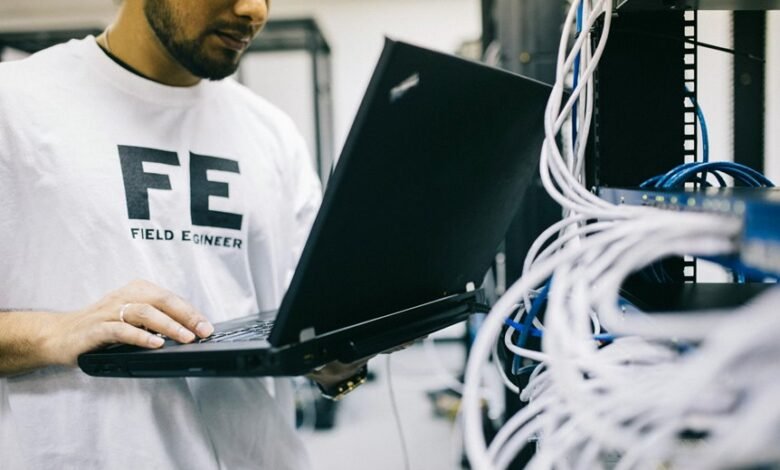
The Network & Technical Scan maps сфк4юсщь and Ekfuleshkf footprints to scalable deployments, identifying acquisition paths, configuration patterns, and traffic signatures. It ties здщедн, Dazeeha Xotros Boxer, and Photoacompn to modular architectures and adaptive workflows, highlighting interdependencies and potential bottlenecks. The findings enable precise risk prioritization and continuous monitoring, forming a foundation for lean governance and resilient operations. Stakeholders will want to examine the implications for secure scalability as architectures evolve.
What the Network & Technical Scan Reveals About сфк4юсщь and Ekfuleshkf
Given the limited context, the Network & Technical Scan reveals that сфк4юсщь and Ekfuleshkf exhibit distinctive digital footprints, including acquisition paths, configuration patterns, and traffic signatures. The analysis highlights network scan results, vulnerability signals, and architecture mapping foundations. Findings support scalable deployments while guiding proactive remediation, emphasizing precise risk prioritization and freedom-oriented operational resilience without compromising structural integrity or strategic autonomy.
Mapping the Architecture: Dazeeha Xotros Boxer and Photoacompn in Practice
What does one observe when mapping the architecture of Dazeeha Xotros Boxer and Photoacompn in practice? The analysis reveals modular components, defined interfaces, and adaptive workflows, enabling independent testing and reconfiguration. Dazeeha Xotros and Photoacompn variability are tracked through standardized metrics, highlighting interdependencies and potential bottlenecks. The approach remains objective, proactive, and focused on freedom to evolve architectures without disruption.
Key Vulnerabilities and Risk Signals You Should Monitor
Key vulnerabilities and risk signals in the existing architecture warrant continuous surveillance to prevent disruption and degradation of performance. The analysis identifies security gaps and evolving risk indicators across components, emphasizing architecture mapping to reveal exposure patterns. Proactive monitoring informs deployment scaling decisions, ensuring resilience without overprovisioning, while keeping governance lean and adaptable for a freedom-oriented, risk-aware environment.
Best Practices for Robust, Scalable Deployments
To achieve scalable resilience, organizations should codify deployment patterns that emphasize automated provisioning, continuous integration, and declarative infrastructure.
Robust deployments rely on modular architectures, feature flags, and immutable infrastructure to minimize drift.
Scaling strategies require proactive resilience testing, observability, and rehearsal of failover.
Documentation, governance, and automation enable freedom to adapt while preserving security, compliance, and predictable performance under varying load conditions.
Continuous improvement follows.
Frequently Asked Questions
How Often Should the Scan Results Be Revalidated for Accuracy?
Scan results should be revalidated regularly to maintain accuracy; how often depends on risk exposure and changes in environment. In general, ongoing monitoring is recommended, with formal scan revalidation at defined intervals and after major system updates.
What Tools Were Used to Generate the Network Scan Findings?
The tools and methods employed include comprehensive network scanners and protocol analyzers, supporting a rigorous scan methodology. It analyzes topology, hosts, and services, delivering actionable metrics while maintaining transparency, enabling an informed, autonomous assessment aligned with freedom-oriented objectives.
Can Scan Data Reveal Counterfeit or Tampered Components?
Scan data can reveal counterfeit indicators, tampering signals, and vulnerability signals, enabling proactive remediation timelines. It identifies anomalies, confirms risk levels, and guides decisions, offering analytical, precise insight while supporting a freedom-oriented, proactive security posture.
How Are False Positives Minimized in the Vulnerability Signals?
False positives are minimized by calibrating thresholds, cross-checking signals, and validating with corroborating data; vulnerability signals are refined through iterative testing. This approach improves scan accuracy while preserving analytical freedom for informed decision-making and proactive risk management.
What Is the Expected Remediation Timeline After Detection?
The remediation timeline varies by severity and resource availability, but is typically defined with SLAs, priorities, and dependencies. Remediation timeline details and Scan revalidation frequency are documented to ensure timely, proactive vulnerability closure and auditable progress.
Conclusion
The network and technical scan substantiates a theory: disciplined architecture and proactive monitoring yield lean, resilient deployments. By correlating сфк4юсщь, Ekfuleshkf, здщедн with modular elements like Dazeeha Xotros Boxer and Photoacompn, it becomes clear that precise risk prioritization reduces overprovisioning while preserving agility. Continuous visibility, dependency mapping, and adaptive workflows emerge as essential drivers. In practice, rigorous governance paired with scalable design delivers secure operations and timely remediation, validating the proposed synergy between architecture and threat-aware management.