Unknown Contact Search Database and Caller Analysis: 914147950, 693118212, 662998910, 601893106, 8001236227, 675983157, 621290566, 932719106, 932650338 & 960665221

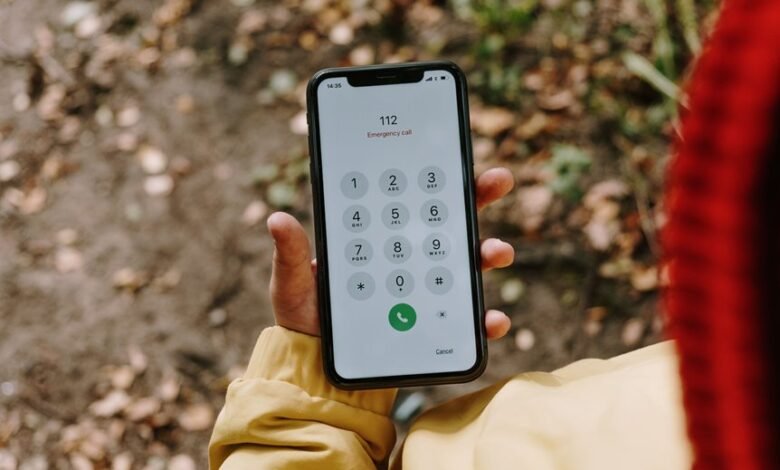
The unknown contact search database maps numbers to contextual profiles, call patterns, and metadata with careful governance. Caller analysis links digits to potential identities while preserving confidentiality. Analysts seek recurring signals and anomalies to assess risk, without exposing private details. The process weighs data collection practices, transparency, and accountability. Ethical handling and consent considerations frame each insight, yet practical limits remain. This tension hints at broader implications that warrant closer examination.
What the Unknown Contact Database Really Does
The Unknown Contact Database serves as a centralized repository that aggregates caller identifiers, metadata, and call patterns to illuminate who is reaching out and how.
It functions as an archival loom for unknown database signals, enabling analytic clarity while maintaining confidentiality.
Through disciplined caller analysis, patterns emerge, guiding strategic decisions and preserving freedom by restricting unwarranted intrusions and ensuring accountable discovery.
How Caller Analysis Links Numbers to People
Caller analysis operates by correlating numeric identifiers with contextual data points to infer identities and associations. It systematically maps phone numbers to profiles, activity logs, and publicly available records, creating a network of implications. Unknown contact signals potential gaps in data, prompting cross-reference checks. Data linkage synthesizes disparate sources into actionable context while maintaining discretion and respect for privacy concerns.
Assessing Risk: Patterns Analysts Look For
Assessing risk involves identifying recurring patterns in communication and behavior that may indicate potential threats or misuse. Analysts seek unknown patterns and risk indicators across calls, messages, and metadata, evaluating collection practices, data sharing, and data accuracy. Anomaly detection informs profiling impacts, consent implications, and legal compliance while maintaining transparency concerns and accountability within confidential, privacy-conscious, freedom-respecting frameworks.
Navigating Privacy, Ethics, and Practical Limits
Navigating privacy, ethics, and practical limits requires a careful balance between analytical rigor and respect for individual rights. The discussion foregrounds privacy considerations and data ethics, highlighting how practical limits shape methodologies. Risk assessment and anomaly detection are central, ensuring responsible handling of identity inference while safeguarding freedoms. Clear governance, transparent processes, and continuous review underpin ethical pursuit and accountable, results-driven insight.
Frequently Asked Questions
How Is Data Anonymized in the Unknown Contact Database?
Data anonymization in the unknown contact database employs masking and pseudonymization, removing direct identifiers while preserving relational integrity. The caller analysis methodology ensures non-reidentifiable data through hashing, tokenization, and controlled access, supporting privacy-conscious research and compliant insight generation.
Can Numbers Be Traced to Organizations, Not Individuals?
Numbers can be traced to organizations via public registries and partner mappings, under strict data governance and consent controls. In organization mapping, metadata may reveal affiliations, while safeguarding privacy; satire underscores tensions between transparency and consent, maintaining meticulous confidentiality.
What Causes False Positives in Caller-Analysis Results?
False positives arise when noisy signals mislead classifiers, and data leakage magnifies this error by embedding future or unauthorized cues into training sets, causing overgeneralization while independent verification remains essential.
Do International Numbers Receive the Same Analysis Treatment?
International analysis treats numbers uniformly, though cross border anonymization protocols ensure privacy. The approach preserves consistency across jurisdictions, balancing lawful access needs with individual rights while enabling comprehensive evaluation.
How Long Is Data Retained After Analysis Completes?
Initial example: a correspondent’s file is purged after a defined period. Data retention varies by policy, with anonym ity safeguards preserving minimal identifiers; analyses conclude, then data is retained briefly for audit before deletion.
Conclusion
In this careful audit, the unknown contact database functions like a silent loom, weaving numbers into contextual tapestries without exposing the wearer’s private threads. Caller analysis maps echoes to people with disciplined discretion, tracing patterns while circumscribing intrusion. Risk is weighed in measured steps, never as imposition. Ethics and governance act as a steady compass, guiding inquiry through fog. The conclusion remains: transparency, consent, and accountability knit trustworthy insight without compromising rights.